The pressure on warehouse and logistics operations has never been greater. Rising labour costs, persistent staff shortages, and customer expectations for faster fulfilment are forcing operations managers to think differently. AGVs are becoming increasingly important, and the business case is stronger than many realise.
1. Consistent throughput, around the clock
A human-operated forklift is limited by shift patterns, fatigue, and break times. Automated forklifts run continuously — days, nights, and weekends — without performance degradation. For high-volume operations, this alone can dramatically increase throughput and efficiency without adding headcount. Tasks like pallet movements, goods-in transfers, and racking replenishment happen on a predictable, uninterrupted schedule.
2. Meaningful reductions in labour costs
Labour typically accounts for over 50% of warehouse operating costs. Automated forklifts don't replace your entire workforce, but they do allow you to redeploy skilled people to higher-value tasks like quality control, exception handling, and customer-facing roles. Automation doesn't mean fewer jobs; it means better-used people.
3. Fewer accidents, lower insurance risk
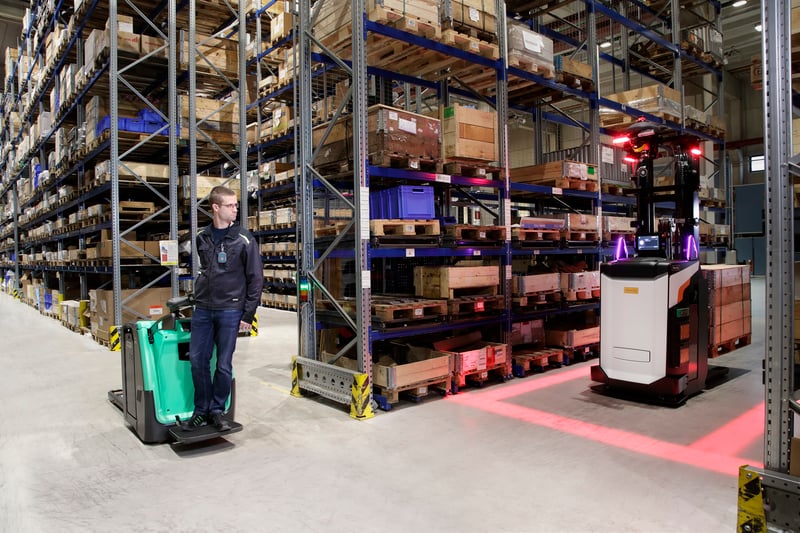
Forklift incidents are one of the leading causes of workplace injury in UK warehouses. Automated systems follow fixed or dynamically mapped routes, operate within defined speed limits, and use sensors to stop immediately if a person or obstacle enters their path. Fewer incidents mean reduced HSE risk and a safer environment for your team.
4. Greater inventory accuracy
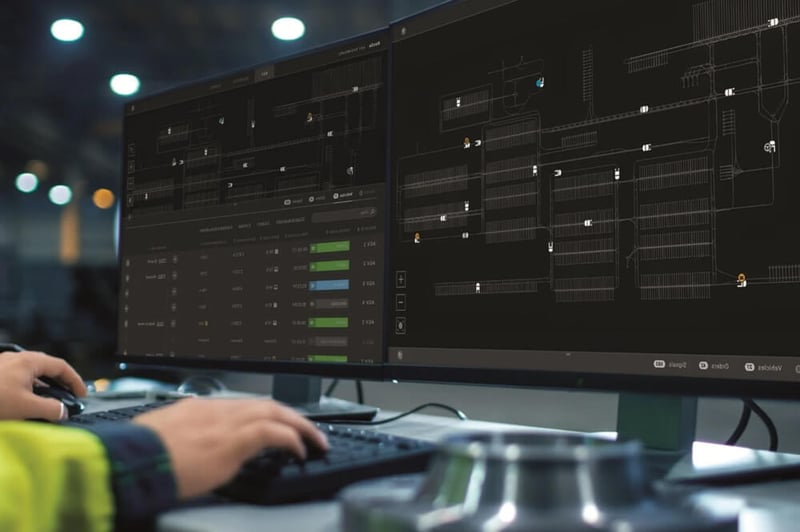
Automated forklifts are typically integrated with your warehouse management system (WMS). Every movement is logged in real time, meaning no manual scanning errors, no misplaced pallets, no undocumented transfers. The result is inventory accuracy that consistently reaches 99%+, reducing costly stock discrepancies and expedited orders.
Is automated forklift technology right for your operation?
Automation works best where movements are repetitive and routes are predictable, like block stacking, racking systems, and goods-in to dispatch flows. If your operation handles high volumes of standardised loads, you're likely already a strong candidate. A site assessment will quickly indicate the potential uplift and payback period for your specific environment.
Ready to see what automated forklifts could do for your operation? Our team at Logisnext UK offers no-obligation site assessments to help you build a clear business case.
Request a site assessment via the Greenline on 0845 3713048 or complete our contact form.