If you’re starting to explore how automation can help your warehouse, but feel you're not quite ready for full automation yet, a mixed fleet approach may be the ideal first step.
What is a mixed fleet?
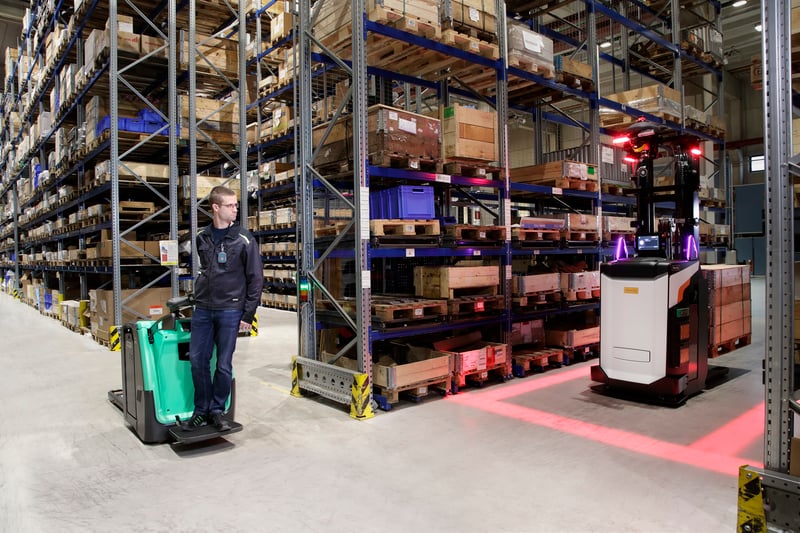
A mixed fleet refers to a warehouse setup where both manually operated vehicles and automated guided vehicles (AGVs) or semi-automated material handling equipment work side by side. Rather than replacing all human-driven processes with robots, a mixed fleet combines the strengths of both to suit different kinds of tasks. We refer to this concept as optimal automation.
The Key Benefits of Choosing a Mixed Fleet
Efficiency & Productivity Gains
- AGVs are designed for repetitive, predictable tasks like moving pallets from point A to B. This frees up human operators to focus on tasks requiring judgement, adaptability or manual dexterity.
- Warehouses using a mixed fleet often see smoother material flow and increased throughput because each task is done by the most suitable “worker”.
Cost-Control & Better Return on Investment (ROI)
- Full automation can demand significant upfront investment. A mixed fleet lets you adopt automation gradually, lowering initial cost while still reaping the main benefits of AGVs.
- Over time, AGVs reduce labour costs, minimise damage to goods and infrastructure, and offer predictable maintenance and operating costs.
Flexibility & Scalability
- Mixed fleet is especially useful if your warehouse handles fluctuating workloads, seasonal peaks, or variable tasks. Since AGVs handle the repetitive tasks, human operators remain free to respond to unpredictable or non-standard demands.
- As your business grows or changes, you can scale up automation or adjust the balance between AGVs and manual trucks without a major overhaul.
Safety & Quality Control
- AGVs come with advanced safety features (e.g. sensors, obstacle detection) and operate with high precision, reducing the risk of accidents, damage, and human error.
- Meanwhile, for tasks that require careful judgement or fine handling (e.g. uneven loads, complex stacking), manual forklifts give human operators the control and flexibility robots might lack.
What a mixed Fleet Typically Looks Like
A typical mixed fleet might include:
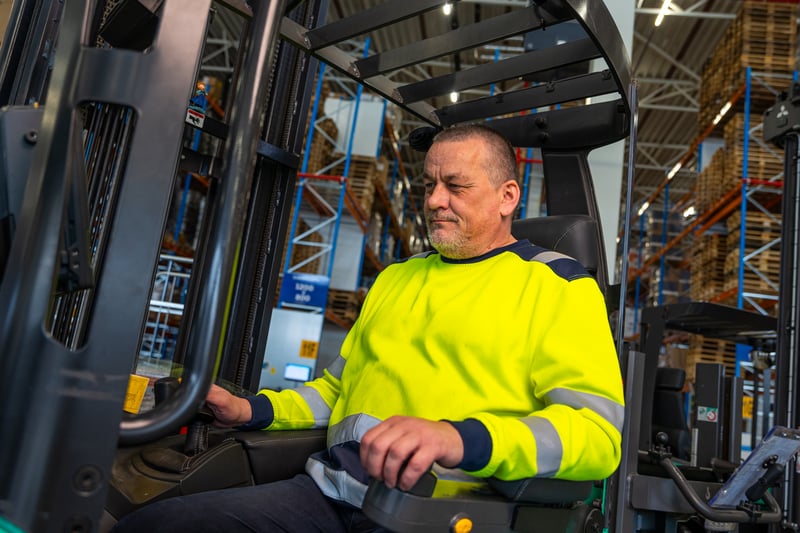
- Manual forklifts for irregular load handling, pallet stacking/unstacking, loading/unloading lorries, dealing with variable or unpredictable tasks.
- AGVs handling repetitive transport of pallets between zones, racking areas, conveyors or packing stations.
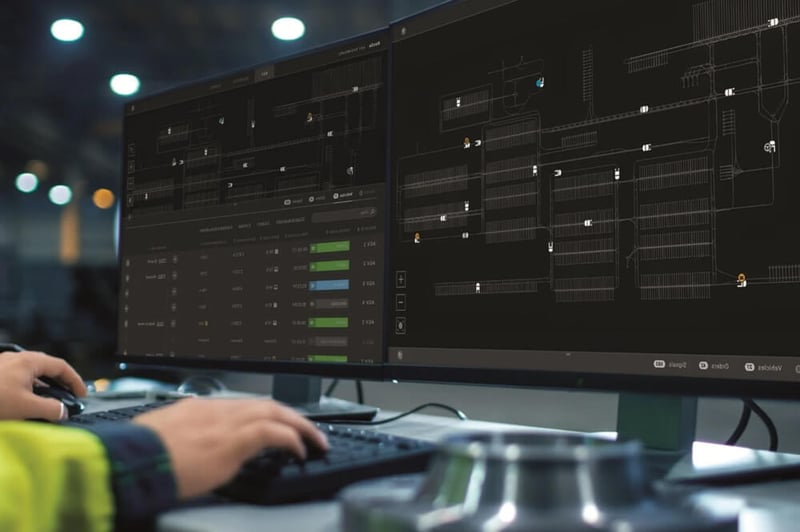
- A warehouse management system (WMS), or dedicated fleet-management software, that assigns each material movement task either to AGV or manual truck, depending on load type, location, priority, etc.
- Safety systems to ensure human operators and AGVs can operate simultaneously without risk, e.g. scanners, proximity detection systems, clear separation or signaling when necessary.
When a Mixed Fleet Makes More Sense Than Full Automation
A mixed fleet is often the best fit for warehouses that:
- Have a mix of repetitive and unpredictable tasks e.g. handling different types of goods, varying pallet sizes, seasonal peaks.
- Cannot justify the high upfront cost of full automation.
- Need to maintain flexibility, either because of changing order volumes, varied load types, or limited space/layout constraints.
- Want to improve safety, reduce labour dependency and increase efficiency, but still rely on human judgement for complex or variable tasks.
Many warehouse operators realise that a fully automated warehouse is not always the optimal or most cost-effective solution. Mixed fleet gives you the benefits of automation where it makes sense and leaves the rest in human hands.
Getting Started
If you’re at the beginning of your automation journey and simply exploring automation and mixed-fleet ideas for your warehouse, here are some steps to follow:
- Map out your workflows. List tasks that are repetitive, high-volume, or predictable (e.g. pallet transport, warehouse transit) vs tasks that are variable. These differences help you identify where AGVs might add most value.
- Talk to providers who offer both manual forklifts and AGV solutions. That ensures the solution can grow with you — for example, providers like Mitsubishi Forklift Trucks and Rocla AGV.
- Consider safety, layout and integration with existing systems. A mixed fleet works best when AGVs and humans can co-exist safely, and when there's a management system (like WMS + fleet control) to coordinate workflows.
- Think about scalability and ROI. Use realistic volume projections (e.g. pallets moved/day) to assess whether partial automation will pay off — many businesses recoup investment in a few years.
- Pilot first, then expand. Starting with a few AGVs and manual trucks lets you test the mixed-fleet approach, measure gains, adjust workflows — before you commit more heavily.
For many UK warehouses, especially those with moderate order volume, mixed load types, or variable demand, a mixed fleet offers a very practical “first step into automation.”
It delivers a blend of efficiency, cost control, flexibility, safety and scalability, without requiring a full automation overhaul.
If you're interested in discussing what options are available for your business, get in touch via the Greenline on 0845 3713048 or complete our contact form.